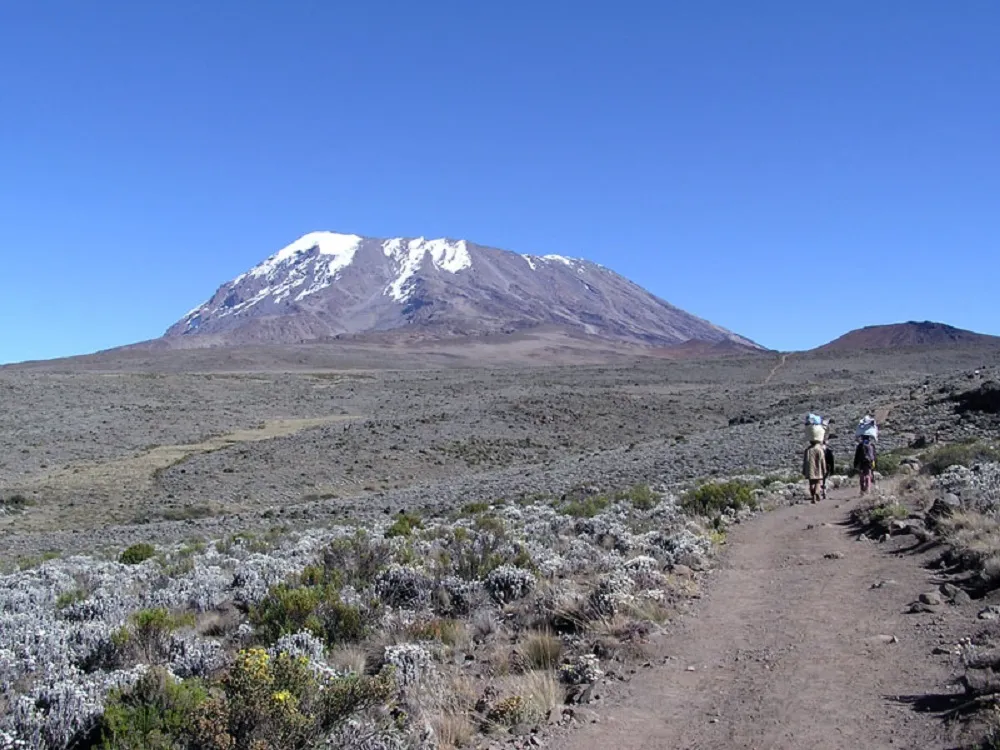
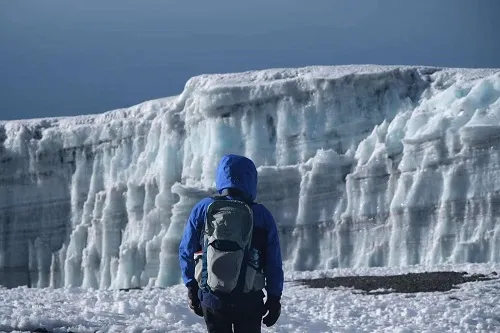
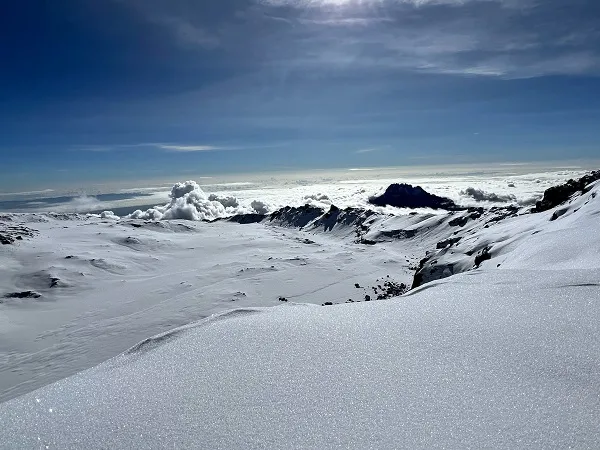
"Day one was brutal in the best way — steep, forested, and we saw maybe four other climbers all day. By the time we reached Barranco I understood why people who've done other routes come back for this one."
Why this route
The mountain's most direct route up
Umbwe starts closer to Moshi than any other route, on Kilimanjaro's southern flank, and climbs a narrow, forested ridge almost straight up toward Barranco Camp. There's no gentle plateau crossing like Lemosho, no gradual moorland like Machame — just a steep, direct forest trail for the first two days, occasionally requiring hands-on-rock sections.
Once the trail reaches Barranco Camp on day two, it joins the exact same Southern Circuit used by Machame and Lemosho climbers: the same Barranco Wall scramble, the same Karanga and Barafu staging days, the same summit night. What makes Umbwe distinct is entirely in its first 48 hours — and in how few other climbers you'll share the trail with while it lasts.
Over 1,300 m of gain on day one alone — more than any other standard route, with a narrower, more direct trail.
The least-climbed standard itinerary on Kilimanjaro — the first two days in particular are markedly emptier than Machame's equivalent stretch.
From Barranco Camp onward, this is the identical acclimatization path used by Machame and Lemosho — no compromise on the summit-night approach.
Route intelligence
Umbwe against every other path up
Every route reaches the same summit. What differs is how steep the early days are, how much company you'll have, and how much time your body gets to adjust — and that shows up directly in success rates.
| Route | Duration | Success rate | Character | Crowding |
|---|---|---|---|---|
| Umbwe (6 days) | 6 days | 65–70% | Steepest, most direct, quietest route | Very low, first 2 days |
| Machame (7 days) | 7 days | 65–75% | Steep classic route, most scenic | High |
| Lemosho (7 days) | 7 days | 85–90% | Gentler western approach | Low, first 2 days |
| Lemosho (8 days) | 8 days | 92–95% | Most gradual, extra acclimatization night | Low, first 3 days |
| Marangu (6 days) | 6 days | 60–65% | Hut accommodation, same trail both ways | Moderate |
Umbwe Ridge
Barafu ·
Sunrise
Uhuru PeakDay by day
Trace the ascent
Six days, mapped by the elevation you'll actually stand at each night. The watch in the corner tracks your place on the mountain as you scroll — and your booking details are right here whenever you're ready.
-
Day 1 · Rainforest zone — steepest day1,600 m → 2,900 m · 5–6 hrs, 9 km
Umbwe Gate to Umbwe Cave Camp
The steepest opening day of any route on Kilimanjaro. A narrow forest track climbs directly up a ridge through dense, humid rainforest, with almost no flat stretches. Umbwe Cave, a rock overhang once used by hunters, marks the first camp.
08:00Pickup from Moshi hotelMeet your guide and crew, then a short drive to Umbwe Gate, the closest trailhead to Moshi of any route.
10:00Begin the ridge climbSteep, direct trail up a narrow forest ridge — noticeably steeper than any other route's opening day.
16:00Arrive Umbwe Cave CampA small, quiet clearing beside the rock overhang that gives the camp its name. Far fewer climbers here than on other routes' first camps.
-
Day 2 · Ridge to moorland, joins the Southern Circuit2,900 m → 3,960 m · 4–5 hrs, 7 km
Umbwe Cave Camp to Barranco Camp
The trail continues along an increasingly narrow, exposed ridge above the forest line, with occasional hands-on-rock scrambling, before dropping into Barranco Camp — where Umbwe merges with the Machame and Lemosho traffic on the shared Southern Circuit.
07:30Climb the exposed ridgeNarrowing trail above the treeline, with short scrambling sections and wide views on clear days.
11:30First views of the Barranco WallThe trail crests and begins its descent toward Barranco Camp, with the following day's climb visible ahead.
13:30Arrive Barranco CampThe route joins the Southern Circuit here — Barranco Wall, Karanga, and Barafu ahead follow the same path as Machame and Lemosho.
-
Day 3 · Southern circuit3,960 m → 4,035 m · 4–5 hrs, 5 km
Barranco Wall to Karanga Camp
The famous Barranco Wall — a 257-metre scramble that looks intimidating from camp but is a straightforward hands-on-rock climb, no technical gear required. The rest of the day undulates across the Southern Circuit toward Karanga.
07:00Scramble the Barranco WallA 1–2 hour scramble with hands-on-rock sections; guides assist at exposed points.
11:00Cross the Karanga ValleyRidge-and-valley terrain with excellent views of the summit glaciers.
14:00Arrive Karanga CampShort day, deliberately, ahead of tomorrow's push to Barafu.
-
Day 4 · Staging day4,035 m → 4,673 m · 3–4 hrs, 4 km
Karanga Camp to Barafu Base Camp
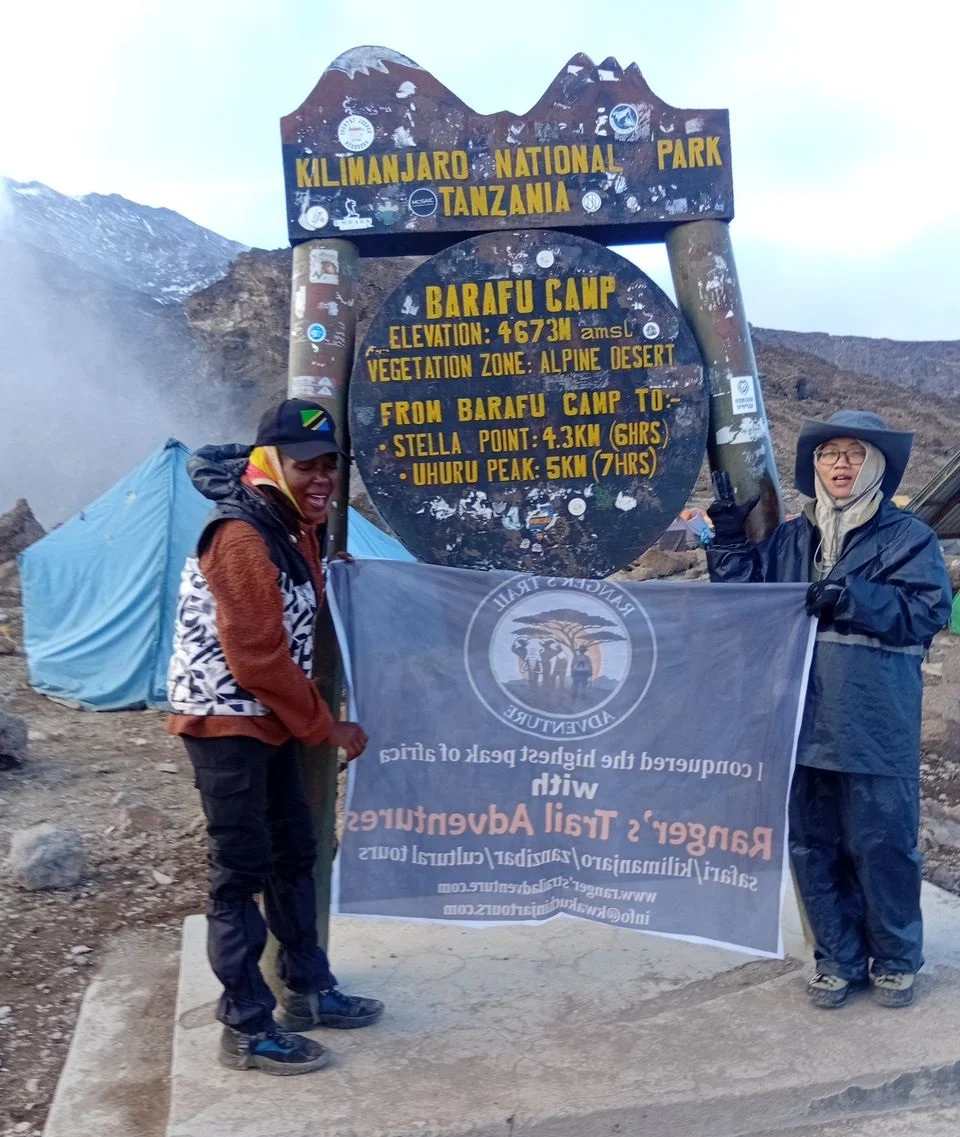
A short, deliberately easy day to Barafu ("Ice") Camp, the final base before the summit push. The afternoon is for rest, gear checks, an early dinner, and sleep before an 11pm–midnight wake-up.
08:30Short trek to BarafuBarren, rocky alpine desert. First direct views of the summit route ahead.
14:00Rest, briefing, gear checkGuide reviews summit-night layering, headlamp checks, and timing. Early dinner around 17:00.
-
Day 5 · Summit day4,673 m → 5,895 m → 3,100 m · ~15 hrs total
Barafu to Uhuru Peak, descend to Mweka
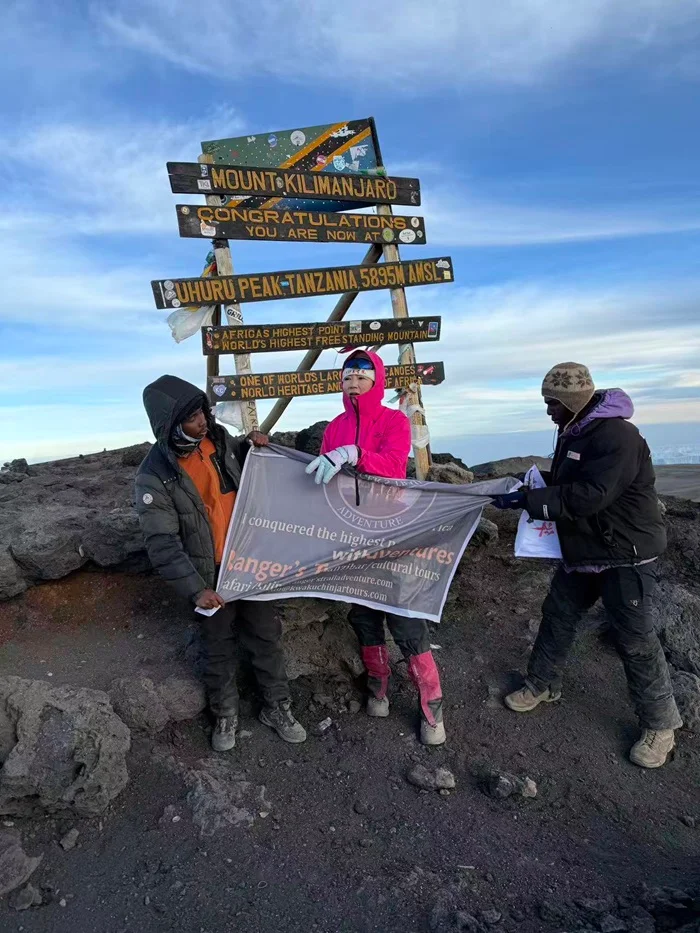
The day the whole itinerary has been building toward. A midnight departure under headlamp climbs steep scree switchbacks to Stella Point on the crater rim, then glacier-lined trail to Uhuru Peak for sunrise — Africa's highest point. A long descent to Mweka Camp follows the same day.
Why the shared Southern Circuit matters hereBy the time summit night arrives, this itinerary has followed the identical Barranco-to-Barafu staging as Machame and Lemosho climbers. The steep, distinctive part of Umbwe is entirely behind you by day two — summit night itself is the same proven approach used across the Southern Circuit.
23:30Wake-up, tea, departureFull layering system on. Slow, deliberate "pole pole" pace set by the guide — deliberate, not a limitation.
06:00Stella Point, then Uhuru PeakStella Point (5,756 m) meets the crater rim; a further hour along the glacier edge reaches Uhuru Peak for sunrise.
10:00Descend to Barafu, on to MwekaFast scree descent to Barafu for a rest and late breakfast, then down through changing vegetation to Mweka Camp.
-
Day 6 · Departure day3,100 m → 1,640 m · 3 hrs, 10 km
Mweka Camp to Mweka Gate, transfer to Moshi
A final, easy descent through rainforest to Mweka Gate, where you'll receive your summit certificate. A short transfer returns you to your Moshi hotel by early afternoon.
08:00Final descent to Mweka GateMuddy, root-covered rainforest trail, noticeably warmer with every hundred metres.
11:30Summit certificate presentationGold certificates for Uhuru Peak; green for Stella or Gillman's Point.
13:00Transfer to Moshi hotelEnd of climb services. Asante sana — thank you for climbing with us.
Camping tiers
Choose your climb package
Identical itinerary across all three — the difference is camping equipment, crew ratio, and support.
What's covered
Inclusions and exclusions
- Kilimanjaro National Park entry and camping fees
- Mandatory rescue fees, all climbers
- Certified, English-speaking mountain guide
- Full porter and cook crew, KPAP fair-wage standard
- All accommodation — 5 nights camping, per tier
- Full board meals, Day 1 lunch to Day 6 lunch
- Purified drinking water throughout
- Daily pulse oximeter health monitoring
- Airport transfers, Moshi / Kilimanjaro (JRO)
- Summit certificate
- International flights to JRO / ARK
- Tanzania tourist visa, approx. $50 online
- Travel and medical evacuation insurance
- Personal climbing gear and clothing
- Crew tips, approx. $220–320 per climber, pooled
- Extra hotel nights, Standard / Comfort tiers
- Personal medications, altitude prophylaxis
- Alcoholic and bottled soft drinks
Preparation
The layering system
Temperatures span 30°C at the gate to -20°C on summit night. Layering, not any single item, is what gets you through it. Sturdy footwear with good grip matters more here than on gentler routes, given the steep, occasionally rocky terrain of the first two days. Full kit list and rental options sent after booking.
- Moisture-wicking base layers (2–3)
- Fleece or softshell mid-layer
- Insulated down jacket, rated to -20°C
- Waterproof, windproof outer shell
- Beanie, sun hat, buff or neck gaiter
- Liner gloves plus insulated mittens
- Waterproof, broken-in hiking boots with good grip
- Moisture-wicking hiking socks (4–5 pairs)
- Thermal sleeping socks
- Waterproof hiking trousers
- Fleece or thermal trousers, summit night
- Gaiters, camp shoes
- 4-season sleeping bag, rated to -20°C
- Headlamp with spare batteries
- Trekking poles, strongly recommended
- 2–3 litre water bladder or bottles
- Daypack, 30–35 litres
- High-SPF sunscreen, personal first-aid kit
When to climb
Best months, by conditions
| Months | Conditions | Rating | Notes |
|---|---|---|---|
| Jan – Mar | Dry, cold summit | Excellent | Clear skies, colder nights, fewer climbers |
| Apr – May | Long rains | Avoid | Heaviest rainfall — the steep ridge trail gets slick and best avoided |
| Jun | Drying out | Good | Transitional — trails firming, fewer crowds |
| Jul – Oct | Dry, peak season | Excellent | Clearest views; still the quietest route even in peak season |
| Nov | Short rains | Fair | Brief afternoon showers, quiet, lush |
| Dec | Drying out | Good | Holiday season, conditions improving |
In their words
What our climbers say
"Standing at Uhuru Peak at sunrise, above the clouds — I still think about that hour most weeks. Our guide's pacing on summit night was the difference between suffering and experiencing it."
"Had done a few multi-day treks before but nothing at altitude. Our guide was upfront that Umbwe wasn't for total beginners, and honestly that steep first push made the rest of the climb feel earned."
Expert answers
Frequently asked questions
-
Umbwe climbs a narrow forest ridge almost straight up from the gate, gaining over 1,300 metres on day one alone with no gradual approach across a plateau like Lemosho or Machame. It's steep, occasionally requires hands-on-rock scrambling, and offers no easy retreat once past Umbwe Cave Camp, which is why it's generally recommended only for climbers with prior trekking experience.
-
Most operators, including us, recommend Umbwe primarily for climbers with prior high-altitude or multi-day trekking experience. The steep, rapid early ascent leaves less margin for adjusting to the terrain than gentler routes, though guides still pace the group carefully and the acclimatization stretch from Barranco onward matches the same Southern Circuit used on Machame and Lemosho.
-
Both are steep, camping-only routes that join the same Southern Circuit path after Barranco Camp. Umbwe is steeper still on day one, with a narrower, more exposed ridge trail and significantly fewer other climbers, while Machame's ascent is spread more evenly across its first two days.
-
Pricing starts at $2,000 per person for the Standard Camping package and rises to $3,800 per person for a Private Premium package with dedicated crew and upgraded equipment. All packages include park fees, camping fees, crew wages, and full board meals on the mountain.
-
Yes. Umbwe is the least-climbed standard route on Kilimanjaro, largely because of its steep reputation. The first two days in particular are far quieter than the equivalent stretch on Machame, though the trail merges with Machame and Lemosho traffic at Barranco Camp and stays on the shared Southern Circuit from there.
-
Your guide checks blood oxygen twice daily with a pulse oximeter and is trained to spot early symptoms of acute mountain sickness. Mild symptoms are managed with rest, hydration, and pace adjustment; if symptoms escalate, guides descend the climber immediately, regardless of proximity to the summit — a mandatory protocol, not a judgment call.
Other Kilimanjaro routes