★★★★★
"We climbed in November against everyone's advice about the rainy season, and Rongai stayed dry the whole way up. Barely saw another group until Kibo Hut."
LARS P. — DENMARK · NOVEMBER CLIMB
Rongai climbs Kilimanjaro from the north, near the Kenya border — the driest route on the mountain and the least crowded, then descends the entirely different southern slopes via the Marangu path. Two mountains for the price of one route.
The route, mapped
Rongai gains altitude at a steady, moderate gradient across drier moorland and alpine desert, with an acclimatization stop at Mawenzi Tarn before the final push. The descent follows the Marangu Route on the mountain's southern side — a genuinely different landscape from the one you climbed.
Why this route
Every other Kilimanjaro route approaches from the south or west. Rongai alone climbs from the north, starting near the Kenya border in dry, open pine forest rather than the dense rainforest of Machame or Lemosho. Because it sits in the mountain's rain shadow, Rongai stays noticeably drier even during the shoulder rainy months, and its lower foot traffic makes for a genuinely peaceful first few days.
The route joins the classic high-altitude terrain around Mawenzi Tarn and Kibo Hut before the summit push, then descends via the Marangu Route on the southern side — meaning you experience two distinct faces of Kilimanjaro rather than retracing the same trail down. The gradient throughout is more gradual than Machame's steep pitches, trading some scenic variety for a steadier, more forgiving climb.
Starting near the Kenya border, Rongai offers a genuinely different first two days than any southern route — quieter, drier, and less trafficked.
The detour to Mawenzi Tarn Camp at 4,330 m, beneath Kilimanjaro's jagged second peak, gives the body a genuine high-altitude night before Kibo Hut.
Descending via Marangu means passing through moorland and forest you never climbed through — no repeated scenery on the way out.
Route intelligence
Every route reaches the same summit. What differs is how much time your body gets on the way there, and how much of the mountain you actually see — and both show up in this comparison.
| Route | Duration | Success rate | Character | Crowding |
|---|---|---|---|---|
| Rongai (6 days) | 6 days | 70–75% | Only northern route — dry, steady gradient | Low |
| Machame | 6–7 days | 65–75% | Steep, scenic, busy | High |
| Marangu | 5–6 days | ~45% | Same trail up and down, hut-based | Moderate |
| Lemosho | 7–8 days | 85–95% | Quietest start, most gradual | Low, first days |
| Northern Circuit | 9 days | 95%+ | Full circuit of the mountain | Very low |
 Mawenzi Tarn
 Kibo Hut · Sunrise
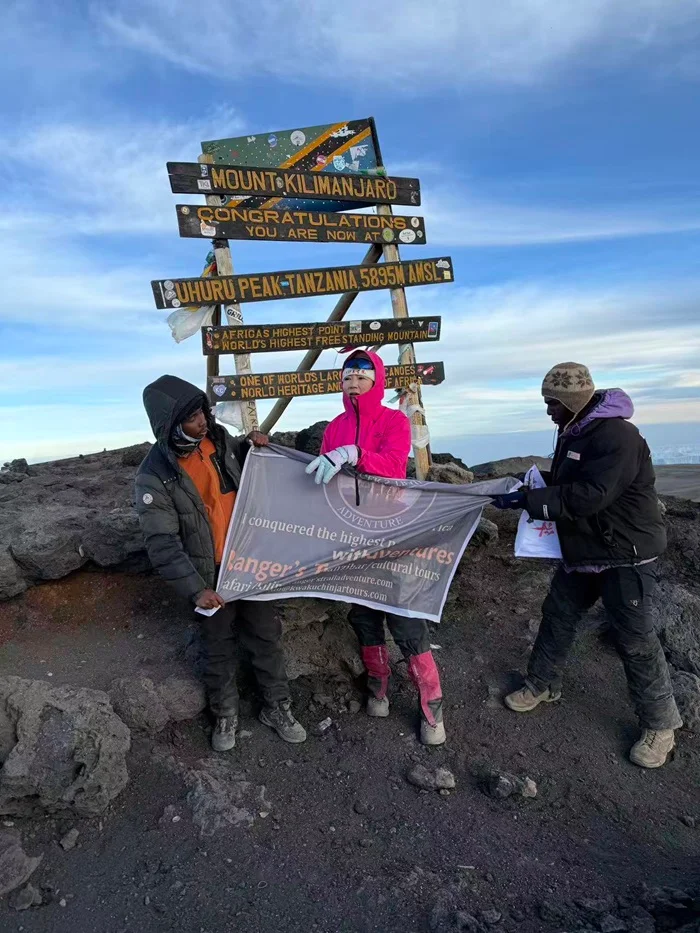 Uhuru Peak
Day by day
Six days, mapped by the elevation you'll actually stand at each night. The watch in the corner tracks your place on the mountain as you scroll — and the booking form is right here if you're ready.
From the remote Rongai Gate near the Kenya border, the trail climbs gently through pine plantation and open, drier forest — a noticeably different feel from the dense rainforest on Kilimanjaro's southern routes. A short, easy first day eases you into the climb.
A longer transfer than most routes — around 3 hours from Moshi, skirting the mountain's northern base near the Kenyan border.
Gentle, well-graded trail through pine forest, with a real chance of spotting colobus monkeys or forest birds.
Also called "Rongai Cave Camp," at the edge of the moorland zone. Quiet, with far fewer neighboring groups than the southern routes.
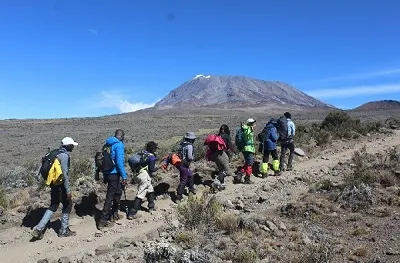
A long but gentle day across open moorland with wide views toward Kenya and, on very clear days, Mount Kilimanjaro's neighbor peak Mawenzi coming into full view for the first time. The gradient is steady rather than steep.
Rolling moorland trail with heather and increasingly sparse vegetation as altitude increases.
First close views of Mawenzi's jagged volcanic ridgeline, dramatically different from Kibo's smoother dome.
A sheltered camp in a grassy bowl beneath Mawenzi — one of the most scenic camps on the route.
A short but steep climb into alpine desert, camping in a dramatic natural bowl directly beneath Mawenzi's jagged spires at 4,330 m. This high overnight stop is Rongai's key acclimatization mechanism before the final push to Kibo Hut.
At 4,330 m, Mawenzi Tarn is higher than Barranco Camp on the southern routes, giving climbers a genuine high-altitude night with time to spare before summit night — the acclimatization equivalent of Lemosho's Lava Tower loop.
Steeper, rockier trail into true alpine desert — vegetation thins rapidly above 4,000 m.
Camp beside a small tarn directly beneath Mawenzi's dramatic rock spires. Afternoon free for rest and short acclimatization walks.
The trail crosses the vast, barren Saddle plateau between Mawenzi and Kibo — a stark, moon-like landscape unique to this stretch of the mountain. Kibo Hut, the final base before the summit push, sits at the desert's upper edge.
Flat, exposed alpine desert between Kilimanjaro's two peaks — Mawenzi behind, Kibo ahead.
Rest, gear check, and an early dinner before an 11pm–midnight wake-up for the summit push.
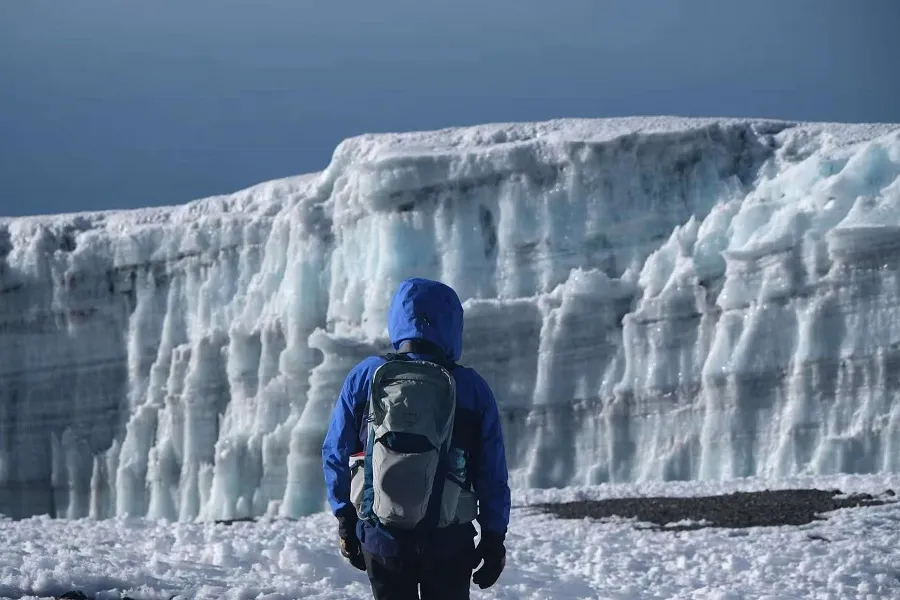
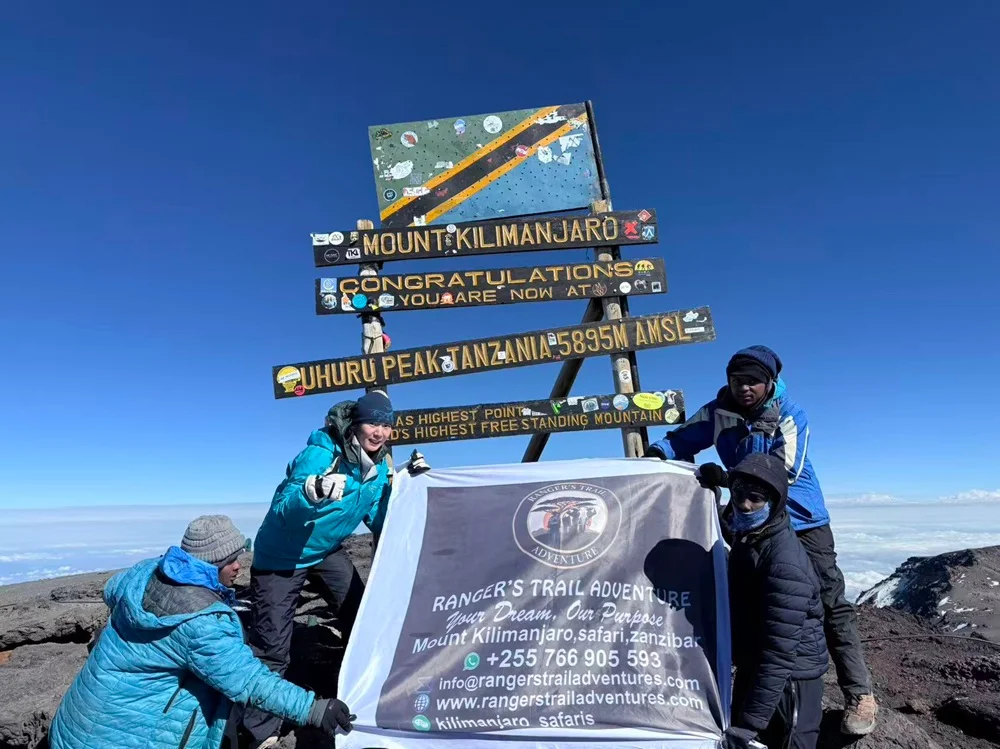
A midnight departure under headlamp climbs steep scree switchbacks to Gillman's Point on the crater rim, then along the glacier-lined path to Uhuru Peak for sunrise. From here the route switches onto the Marangu path for the long descent, passing back over the Saddle to Horombo Hut.
Temperatures drop below -15°C and oxygen is roughly half of sea-level. The extra night at 4,330 m earlier in the itinerary gives your body a meaningful head start compared to routes without a comparable high-altitude rehearsal.
Full layering system on. Slow, deliberate "pole pole" pace set by the guide from the very first step.
Gillman's Point (5,681 m) meets the crater rim; a further two hours around the rim reaches Uhuru Peak for sunrise.
Fast scree descent to Kibo Hut for a rest and late breakfast, then continue across the Saddle to Horombo Hut on the Marangu side.
A long but easy final descent through moorland and then dense southern rainforest — completely different scenery from the northern forest you climbed through on day one. You'll receive your summit certificate at Marangu Gate before transferring back to Moshi.
Gentle downhill through heather and giant groundsel before entering forest.
Lush, humid forest, noticeably different from Rongai's drier northern pine woods.
Gold certificates for Uhuru Peak; green for Gillman's or Stella Point. Transfer to your Moshi hotel follows.
Camping tiers
Identical itinerary across all three — the difference is camping equipment, crew ratio, and support.
What's covered
Preparation
Temperatures span 30°C at the gate to -20°C on summit night. Layering, not any single item, is what gets you through it. Full kit list and rental options sent after booking.
When to climb
| Months | Conditions | Rating | Notes |
|---|---|---|---|
| Jan – Mar | Dry, cold summit | Excellent | Clear skies, colder nights, fewer climbers |
| Apr – May | Long rains | Fair on Rongai | Rain shadow keeps this route drier than the south, but still wet high up |
| Jun | Drying out | Good | Transitional — trails firming, fewer crowds |
| Jul – Oct | Dry, peak season | Excellent | Clearest views; Rongai stays quieter than southern routes even now |
| Nov | Short rains | Recommended for Rongai | The rain-shadow effect makes this the best route on the mountain this month |
| Dec | Drying out | Good | Holiday season, conditions improving |
In their words
"We climbed in November against everyone's advice about the rainy season, and Rongai stayed dry the whole way up. Barely saw another group until Kibo Hut."
"Waking up at Mawenzi Tarn with those spires right above camp was the single best moment of the trip — and then descending through completely different forest on the way out felt like two climbs in one."
"I wanted quiet and Rongai delivered — the first two days felt like we had the mountain to ourselves. Worth it just for that alone."
Expert answers