★★★★★
"Day one nearly broke me and I loved every minute of it. Steep from the first hour, but the crew's pace and the campsite views made it feel earned, not brutal."
DANIEL R. — AUSTRALIA · JULY CLIMB
The Machame Route earns its nickname honestly — camping only, steeper from the first day, and the most scenic classic path up the mountain. Rainforest to arctic ice, mapped below.
The route, mapped
Machame gains altitude faster than Lemosho from the very first camp, then joins the same Lava Tower and Barranco Wall acclimatization stretch before the summit push — a shorter approach, with a steeper early profile to match.
Why this route
Machame starts on Kilimanjaro's southern flank, a short drive from Moshi, and climbs through rainforest into moorland faster than the western Lemosho approach. It's camping-only from the first night, which is where its nickname — the Whiskey Route, a harder-edged counterpart to the hut-based, gentler Marangu "Coca-Cola Route" — comes from.
Our 7-day itinerary joins the same Lava Tower detour and Barranco Wall scramble used by Lemosho climbers, then follows the identical Karanga and Barafu staging days into summit night. It's the route most climbers picture when they think of Kilimanjaro: dramatic ridgelines, the Shira Plateau's open volcanic grassland, and a full sweep of the mountain's five ecological zones in one week.
4,095 m of net gain over seven days, climbing faster than Lemosho in the early stages — the trade-off for a shorter approach.
Day three still rises to Lava Tower at 4,630 m — higher than Barafu camp itself — before dropping back down to sleep at Barranco.
The Barranco Wall scramble is hands-on-rock, not roped climbing. No mountaineering experience required, ever.
Route intelligence
Every route reaches the same summit. What differs is how much time your body gets on the way there, and how steep the early days are — and that shows up directly in success rates.
| Route | Duration | Success rate | Character | Crowding |
|---|---|---|---|---|
| Machame (7 days) | 7 days | 65–75% | Steepest classic route, most scenic | High |
| Lemosho (7 days) | 7 days | 85–90% | Gentler western approach, one longer day | Low, first 2 days |
| Lemosho (8 days) | 8 days | 92–95% | Most gradual, extra acclimatization night | Low, first 3 days |
| Marangu | 5–6 days | ~45% | Same trail up and down, hut lodging | Moderate |
| Rongai | 6–7 days | 70–75% | Dry, quiet, northern side | Low |
 Shira Ridge
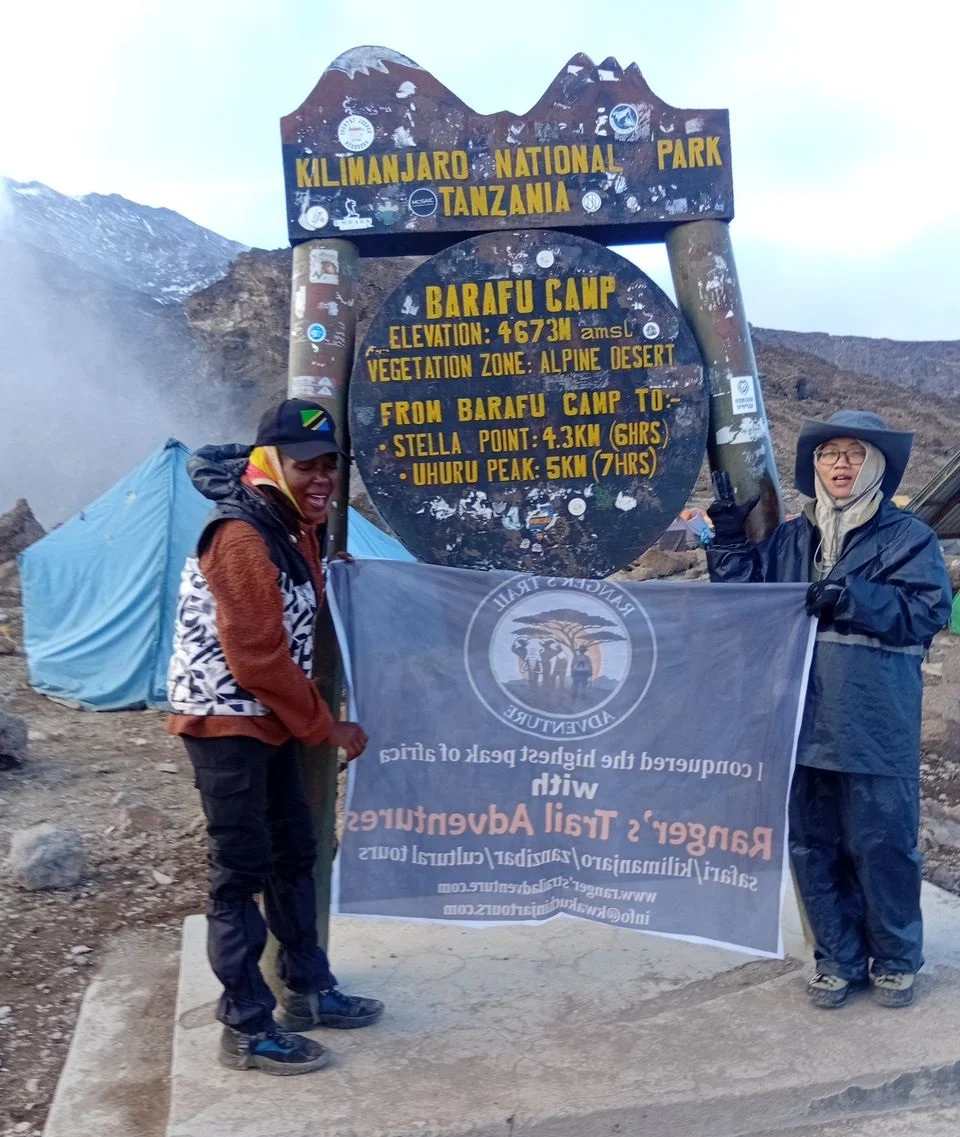 Barafu ·
Sunrise
Barafu ·
Sunrise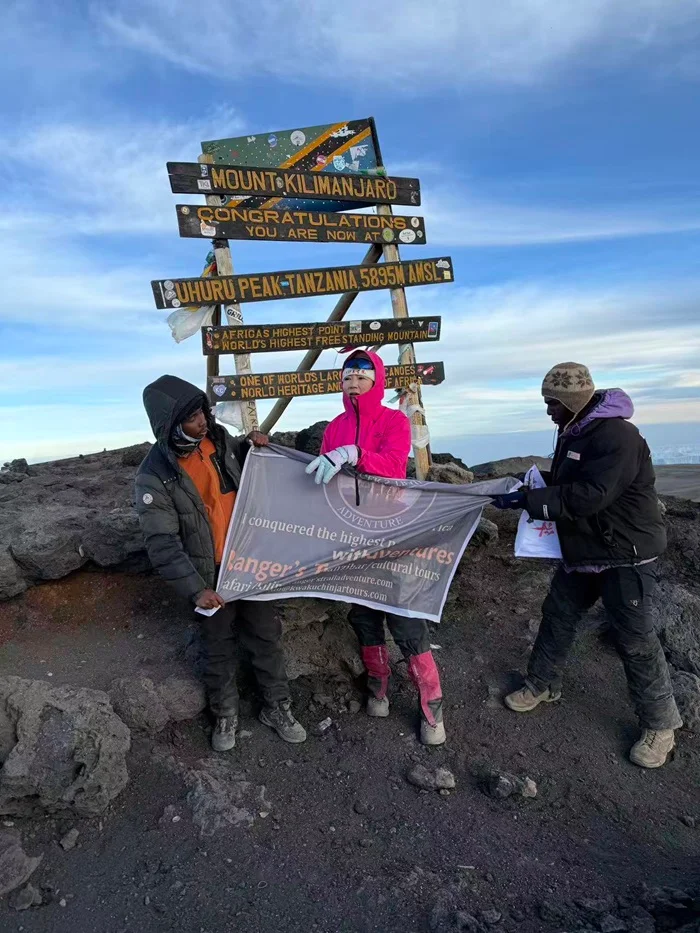 Uhuru Peak
Day by day
Seven days, mapped by the elevation you'll actually stand at each night. The watch in the corner tracks your place on the mountain as you scroll.
After registration at Machame Gate, the trail climbs steadily through dense montane rainforest from the first step — noticeably steeper than the Lemosho approach. Watch for black-and-white colobus monkeys and blue monkeys in the canopy as the trail gains over 1,200 metres in a single day.
Meet your guide and crew, then a 45-minute drive to Machame Gate for registration and park fee processing.
Steady uphill trail through dense, humid rainforest — muddy in wetter months.
Camp already set by the crew, right at the rainforest-moorland boundary. Dinner and a briefing on tomorrow's terrain.
A short distance but a steep, rocky climb out of the rainforest onto the open moorland of the Shira Plateau. The vegetation thins fast — heather and giant lobelia replace canopy — and the first full views of Kibo's summit open up on clear afternoons.
Rocky ridge trail climbing quickly out of the forest line.
First open views across the Shira Plateau toward Kibo.
Exposed, wide-open camp on the plateau — cold, clear nights are typical here.
The textbook "climb high, sleep low" day, identical to the version Lemosho climbers walk. The trail rises to Lava Tower at 4,630 m — higher than the final Barafu camp — for lunch, then descends 670 m into the lush Barranco Valley. This single day does more for summit odds than any other on the route.
Steady, rocky ascent into alpine desert. Thinning air becomes noticeable — pace deliberately slows.
A volcanic plug 90 m above the surrounding terrain — the acclimatization peak before summit night.
Dramatic descent past giant senecio plants, camping beneath the imposing Barranco Wall.
The famous Barranco Wall — a 257-metre scramble that looks intimidating from camp but is a straightforward hands-on-rock climb, no technical gear required. The rest of the day undulates across the Southern Circuit toward Karanga.
A 1–2 hour scramble with hands-on-rock sections; guides assist at exposed points.
Ridge-and-valley terrain with excellent views of the summit glaciers.
Short day, deliberately, ahead of tomorrow's push to Barafu.
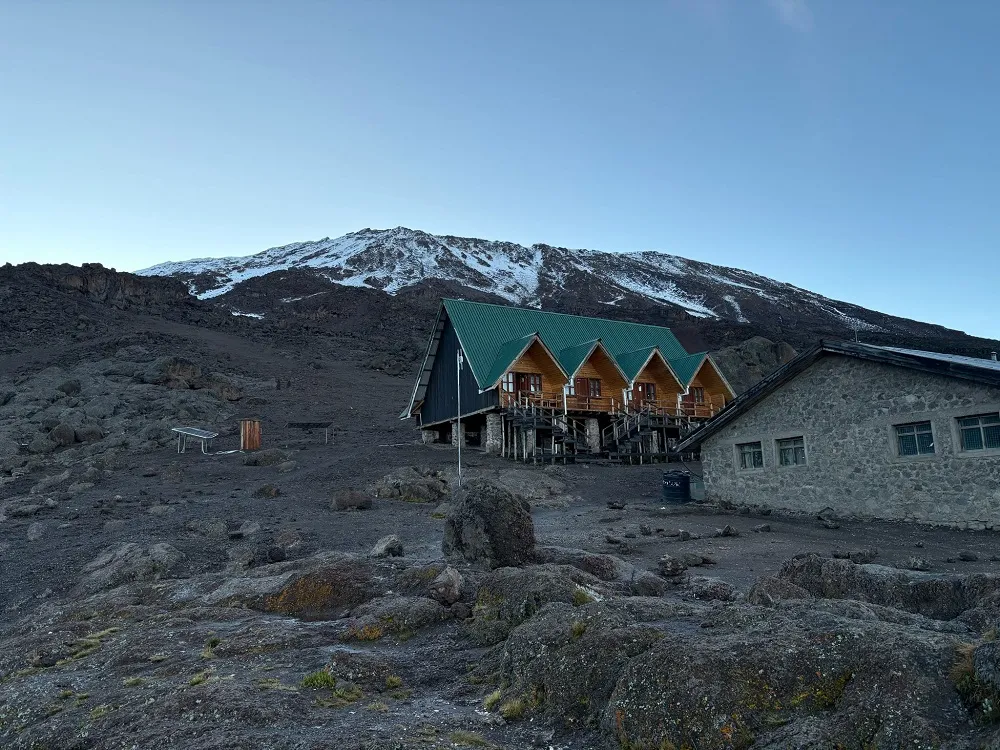
A short, deliberately easy day to Barafu ("Ice") Camp, the final base before the summit push. The afternoon is for rest, gear checks, an early dinner, and sleep before an 11pm–midnight wake-up.
Barren, rocky alpine desert. First direct views of the summit route ahead.
Guide reviews summit-night layering, headlamp checks, and timing. Early dinner around 17:00.
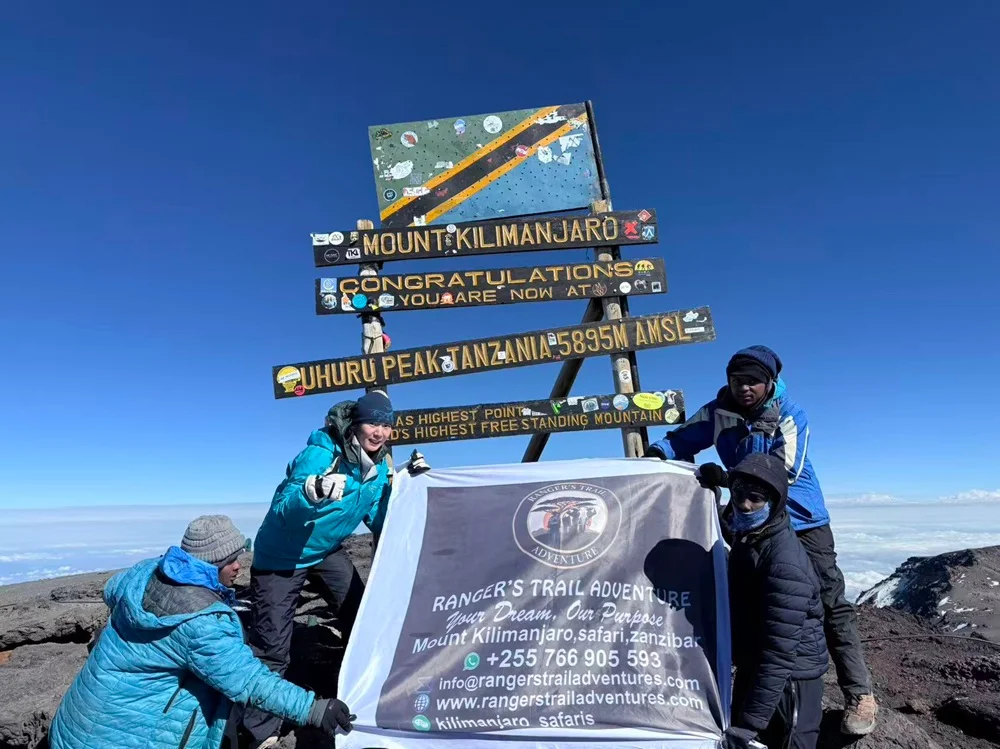
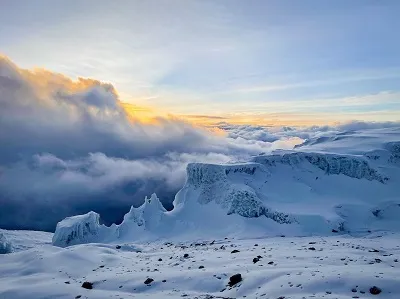
The day the whole itinerary has been building toward. A midnight departure under headlamp climbs steep scree switchbacks to Stella Point on the crater rim, then glacier-lined trail to Uhuru Peak for sunrise — Africa's highest point. A long descent to Mweka Camp follows the same day.
Because Machame's early days are steeper and more compressed than Lemosho's, the body has slightly less runway heading into summit night. Guides set an even more deliberate "pole pole" pace here, and the pulse-oximeter checks earlier in the trek matter more for catching early symptoms before they compound.
Full layering system on. Slow, deliberate "pole pole" pace set by the guide — deliberate, not a limitation.
Stella Point (5,756 m) meets the crater rim; a further hour along the glacier edge reaches Uhuru Peak for sunrise.
Fast scree descent to Barafu for a rest and late breakfast, then down through changing vegetation to Mweka Camp.
A final, easy descent through rainforest to Mweka Gate, where you'll receive your summit certificate. A short transfer returns you to your Moshi hotel by early afternoon.
Muddy, root-covered rainforest trail, noticeably warmer with every hundred metres.
Gold certificates for Uhuru Peak; green for Stella or Gillman's Point.
End of climb services. Asante sana — thank you for climbing with us.
Camping tiers
Identical itinerary across all three — the difference is camping equipment, crew ratio, and support.
What's covered
Preparation
Temperatures span 30°C at the gate to -20°C on summit night. Layering, not any single item, is what gets you through it. Full kit list and rental options sent after booking.
When to climb
| Months | Conditions | Rating | Notes |
|---|---|---|---|
| Jan – Mar | Dry, cold summit | Excellent | Clear skies, colder nights, fewer climbers |
| Apr – May | Long rains | Avoid | Heaviest rainfall, low visibility, muddy trails |
| Jun | Drying out | Good | Transitional — trails firming, fewer crowds |
| Jul – Oct | Dry, peak season | Excellent | Clearest views, busiest trails on this route |
| Nov | Short rains | Fair | Brief afternoon showers, quiet, lush |
| Dec | Drying out | Good | Holiday season, conditions improving |
In their words
"Day one nearly broke me and I loved every minute of it. Steep from the first hour, but the crew's pace and the campsite views made it feel earned, not brutal."
"Standing at Uhuru Peak at sunrise, above the clouds — I still think about that hour most weeks. Our guide's pacing on summit night was the difference between suffering and experiencing it."
"We chose Machame for the views over Lemosho's quieter reputation and don't regret it — the ridge walk on day two alone was worth the extra crowds."
Expert answers