★★★★★
"We saw two other groups in four days on the northern slopes. After hearing how crowded Machame can get, that alone made the extra days and cost worth it for us."
FREYA L. — DENMARK · AUGUST CLIMB
The longest route on Kilimanjaro circles its quiet northern slopes — the side bordering Kenya, seen by almost no other itinerary — before curving back to the summit approach. More time above 3,000 metres than any other route, and the highest success rate to match.
The route, mapped
Every other itinerary approaches from one side and climbs the same acclimatization corridor as several other routes. The Northern Circuit turns away from the busy Southern Circuit after Shira Plateau and circles the remote northern slopes for three full days before curving back to summit night — the longest acclimatization schedule of any route on the mountain.
Why this route
The Northern Circuit begins exactly like our 8-day Lemosho climb — same Londorossi Gate trailhead, same rainforest and Shira Plateau days. The difference starts on day four: instead of turning south toward Lava Tower and the busy Barranco corridor, the trail continues north, circling the mountain's remote northern slopes for three full days before curving back to approach the summit from School Hut on the northeast side.
Very few other itineraries pass through this stretch, so it's by far the quietest multi-day section on the mountain — climbers frequently go entire days without seeing another group. It's also the longest acclimatization schedule available: more nights spent above 3,000 metres than any other standard route, which is the direct reason this itinerary posts the highest summit success rate we offer.
Nine days and eight nights on the mountain — more gradual altitude exposure than any other itinerary before summit night.
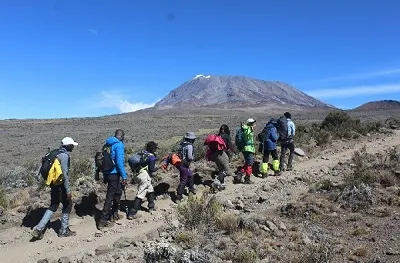
Days four through seven cross terrain most climbers never see, on the mountain's remote northern slopes.
95%+ summit success, edging out even our 8-day Lemosho itinerary, purely on the strength of extra acclimatization time.
Route intelligence
Every route reaches the same summit. What differs is how much time your body gets on the way there — and the Northern Circuit gives it more than any other itinerary we run.
| Route | Duration | Success rate | Character | Crowding |
|---|---|---|---|---|
| Northern Circuit (9 days) | 9 days | 95%+ | Full circuit of the mountain, quietest route | Very low |
| Lemosho (8 days) | 8 days | 92–95% | Most gradual southern approach | Low, first 3 days |
| Lemosho (7 days) | 7 days | 85–90% | Gentler western approach | Low, first 2 days |
| Umbwe (6 days) | 6 days | 65–70% | Steepest, most direct, quietest start | Very low, first 2 days |
| Machame (7 days) | 7 days | 65–75% | Steep classic route, most scenic | High |
| Marangu (6 days) | 6 days | 60–65% | Hut accommodation, same trail both ways | Moderate |
 Northern Slopes
 School Hut ·
Sunrise
School Hut ·
Sunrise Uhuru Peak
Day by day
Nine days, mapped by the elevation you'll actually stand at each night. The watch in the corner tracks your place on the mountain as you scroll — and your booking details are right here whenever you're ready.
After registration at Londorossi Gate, a short drive reaches the Lemosho trailhead at Mti Mkubwa ("Big Tree"). The first walk climbs gently through dense montane rainforest — watch for black-and-white colobus monkeys and turaco birds in the canopy.
Meet your guide and crew, then a 3.5-hour drive to Londorossi Gate for registration and park fee processing.
Gentle rainforest trail, packed earth underfoot, dense canopy overhead.
Camp already set by the crew. Dinner and a briefing on tomorrow's moorland transition.
The trail exits rainforest into heath and moorland — heather, giant lobelia, open views back toward Mount Meru on clear mornings. The path emerges onto the vast Shira Plateau, a collapsed volcanic caldera 500,000 years old.
Steady climb through heath vegetation with occasional scrambling sections.
First open views across the plateau — a landscape most climbers on other routes never see.
Kibo's summit visible on clear evenings.
A shorter, easier day crossing the plateau eastward. Gentle gain gives your body an adjustment window before day four's turn north, away from the routes everyone else follows.
Rolling terrain, volcanic rock formations, endemic alpine-desert plants.
Free afternoon for rest, short acclimatization walks, and photography.
The day this itinerary diverges from every other route. Instead of turning south toward Lava Tower and the busy Southern Circuit, the trail heads north around the Lent Hills into a rarely-visited valley below Kibo's northwestern slopes.
Rolling alpine desert terrain, with the crowds of the Southern Circuit left behind entirely.
A small, quiet camp in a volcanic valley — optional afternoon acclimatization walk up nearby Lent Hills.
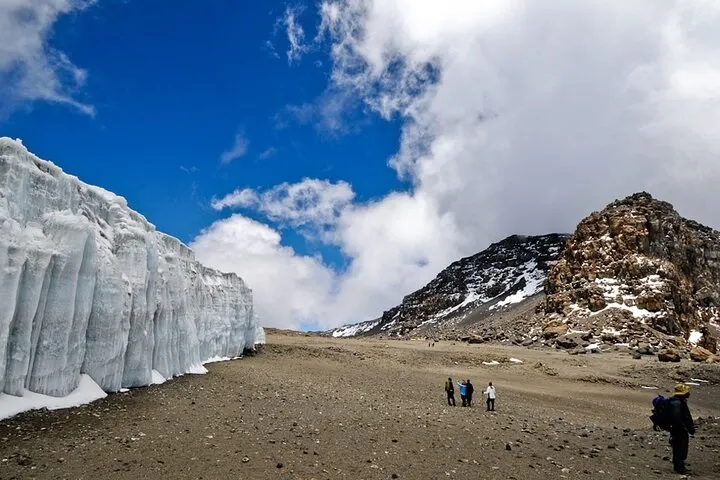
A long traverse across Kilimanjaro's remote northern slopes, on the side of the mountain bordering Kenya. This stretch sees only a handful of climbers per week — wide open alpine desert with almost no other trekking groups in sight.
Long, gently undulating alpine desert crossing, with views toward the Kenyan plains on clear days.
One of the quietest camps on the mountain — the name comes from occasional buffalo tracks in the area, though sightings are rare at this altitude.
A gently undulating day continuing the northern traverse, with Kibo's summit slowly coming back into view as the trail begins curving east toward the final approach.
Rolling alpine desert, gradually curving toward the mountain's northeastern flank.
Named for a rock shelter nearby — another quiet, rarely-crowded camp.
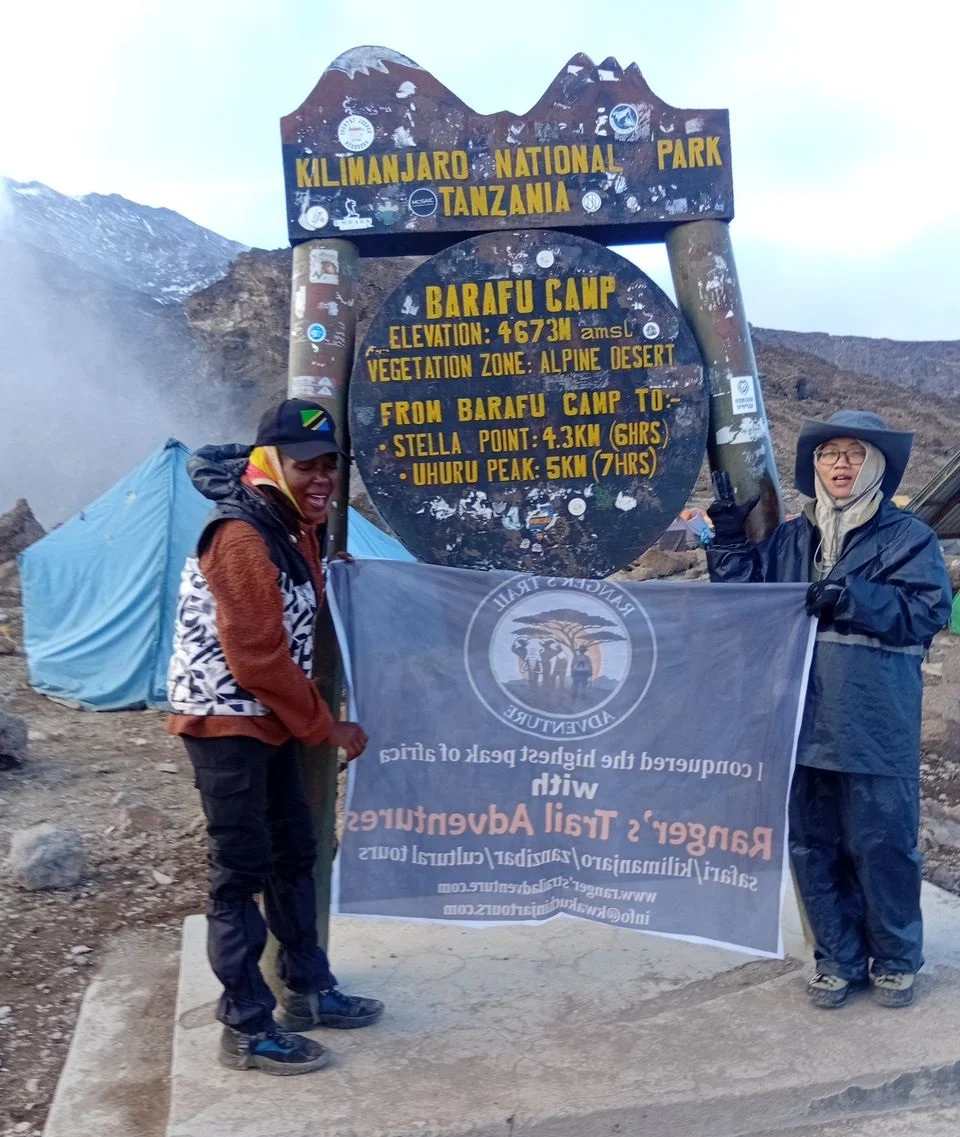
The final approach day, climbing to School Hut on Kibo's northeastern flank — the launch point for summit night on this route, and higher than Barafu Camp used by the Southern Circuit routes.
Steeper alpine desert terrain, with the summit dome clearly visible ahead for most of the day.
Rest, gear check, and an early dinner ahead of a midnight departure.
The day the whole itinerary has been building toward. A midnight departure under headlamp climbs the shorter northeastern approach to Gillman's Point, then along the crater rim to Uhuru Peak for sunrise. A long descent to Mweka Camp follows the same day, crossing back onto the Southern Circuit's descent trail.
By summit night, climbers on this itinerary have spent more nights above 3,000 metres than on any other route — the direct result of the three-day northern traverse. That extra acclimatization is what separates a 95%+ success rate from the 85–92% range of even our best 7 and 8-day routes.
Full layering system on. Slow, deliberate "pole pole" pace set by the guide — the northeastern approach is shorter than the Barafu route but still steep.
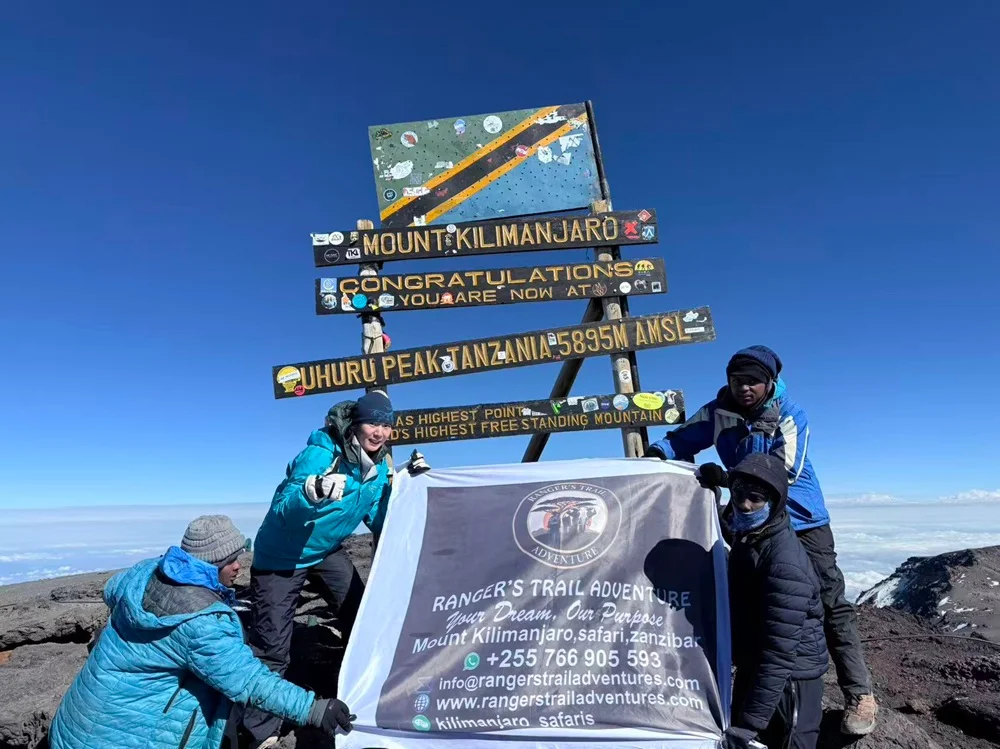
Gillman's Point (5,681 m) meets the crater rim; a further 1.5–2 hours along the rim reaches Uhuru Peak for sunrise.
Descent crosses onto the Southern Circuit's Barafu-to-Mweka trail for a rest stop and late breakfast, then continues down to Mweka Camp.
A final, easy descent through rainforest to Mweka Gate, where you'll receive your summit certificate. A short transfer returns you to your Moshi hotel by early afternoon.
Muddy, root-covered rainforest trail, noticeably warmer with every hundred metres.
Gold certificates for Uhuru Peak; green for Stella or Gillman's Point.
End of climb services. Asante sana — thank you for climbing with us.
Camping tiers
Identical itinerary across all three — the difference is camping equipment, crew ratio, and support.
What's covered
Preparation
Temperatures span 30°C at the gate to -20°C on summit night. Layering, not any single item, is what gets you through it. With nine days on the mountain, durable, well broken-in gear matters more here than on shorter routes. Full kit list and rental options sent after booking.
When to climb
| Months | Conditions | Rating | Notes |
|---|---|---|---|
| Jan – Mar | Dry, cold summit | Excellent | Clear skies, colder nights, fewer climbers |
| Apr – May | Long rains | Avoid | Heaviest rainfall, low visibility, muddy trails |
| Jun | Drying out | Good | Transitional — trails firming, fewer crowds |
| Jul – Oct | Dry, peak season | Excellent | Clearest views — still the quietest route even now |
| Nov | Short rains | Fair | Brief afternoon showers, quiet, lush |
| Dec | Drying out | Good | Holiday season, conditions improving |
In their words
"We saw two other groups in four days on the northern slopes. After hearing how crowded Machame can get, that alone made the extra days and cost worth it for us."
"Nine days sounded excessive until we were on the mountain. By summit night I felt genuinely strong, not just surviving — the extra acclimatization time is real, not marketing."
"Our whole group of six summited, including my father at 64. Our guide credited the northern traverse days directly — nobody was still adjusting to altitude by the time we reached School Hut."
Expert answers